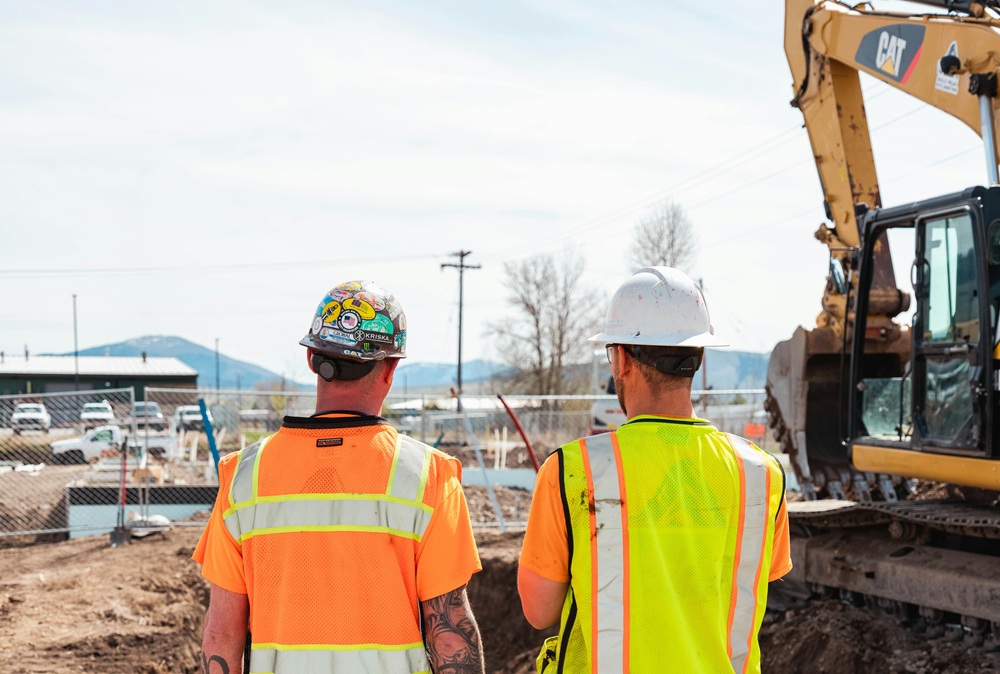
For decades, the American narrative of career success has followed a narrow script: graduate high school, attend college, earn a degree, and secure a white-collar job. While this path remains valid for many, the singular focus on it has created a critical blind spot. The skilled trades—carpentry, electrical work, plumbing, welding—are often relegated to a second-class status, despite their essential role in building and maintaining the nation's infrastructure. This oversight is now manifesting as a severe workforce shortage, threatening economic growth and the realization of major infrastructure projects.
Kelvin Enfinger Jr., Vice President at Greenhut Construction and past chair of ABC North Florida, offers a personal perspective. With over 25 years in construction, Enfinger began as a carpenter and equipment operator, eventually rising to executive and partner. His journey is not unique; it underscores a broader truth: many successful leaders in the industry started with a tool belt. Yet, society still does not celebrate these stories with the same enthusiasm as college acceptances. This disparity has real consequences.
The construction industry faces a generational challenge. As experienced craftspeople retire, there are not enough skilled workers to replace them. Simultaneously, the demand for housing, hospitals, schools, and infrastructure is rising. The nation cannot build its future without first building its workforce. This requires a fundamental shift in how we perceive and promote career pathways.
Enfinger argues that when a high school student announces aspirations to become an electrician or welder, that choice should be met with the same pride as a college-bound student's declaration. Parents, educators, and counselors must present trades as equal options, not fallback plans. Furthermore, employers must invest in training, apprenticeships, and clear career advancement ladders to retain talent and foster loyalty.
One of the most compelling aspects of a trade career is the tangible connection to community. A craft professional can drive past a school and say, “I built that.” This pride is coupled with significant economic opportunity. Trades can serve as a powerful entrepreneurial pipeline—a young apprentice can eventually start their own company, embodying true economic mobility.
However, changing the narrative is not enough. A robust support system is necessary. This includes strengthening career and technical education programs, expanding apprenticeships, fostering school-employer partnerships, and teaching financial literacy alongside technical skills. Developing leadership skills is equally crucial, as many great craftspeople are promoted to supervisory roles without adequate preparation.
This is not an anti-college argument. It is a plea for options. A prospective engineer should have a clear path to university; a prospective electrician deserves an equally clear path into apprenticeship. Both choices are valid and should be treated as such. As Enfinger notes, “Some of the greatest untapped talent in America is sitting in classrooms right now, waiting for someone to show them a different possibility.”
The responsibility lies with all of us—industry leaders, educators, and communities—to expand the definition of success. America needs builders, makers, and problem-solvers. The future will not be crafted solely in boardrooms; someone still has to build it. By elevating the skilled trades, we can address the workforce shortage and honor the dignity of all work.