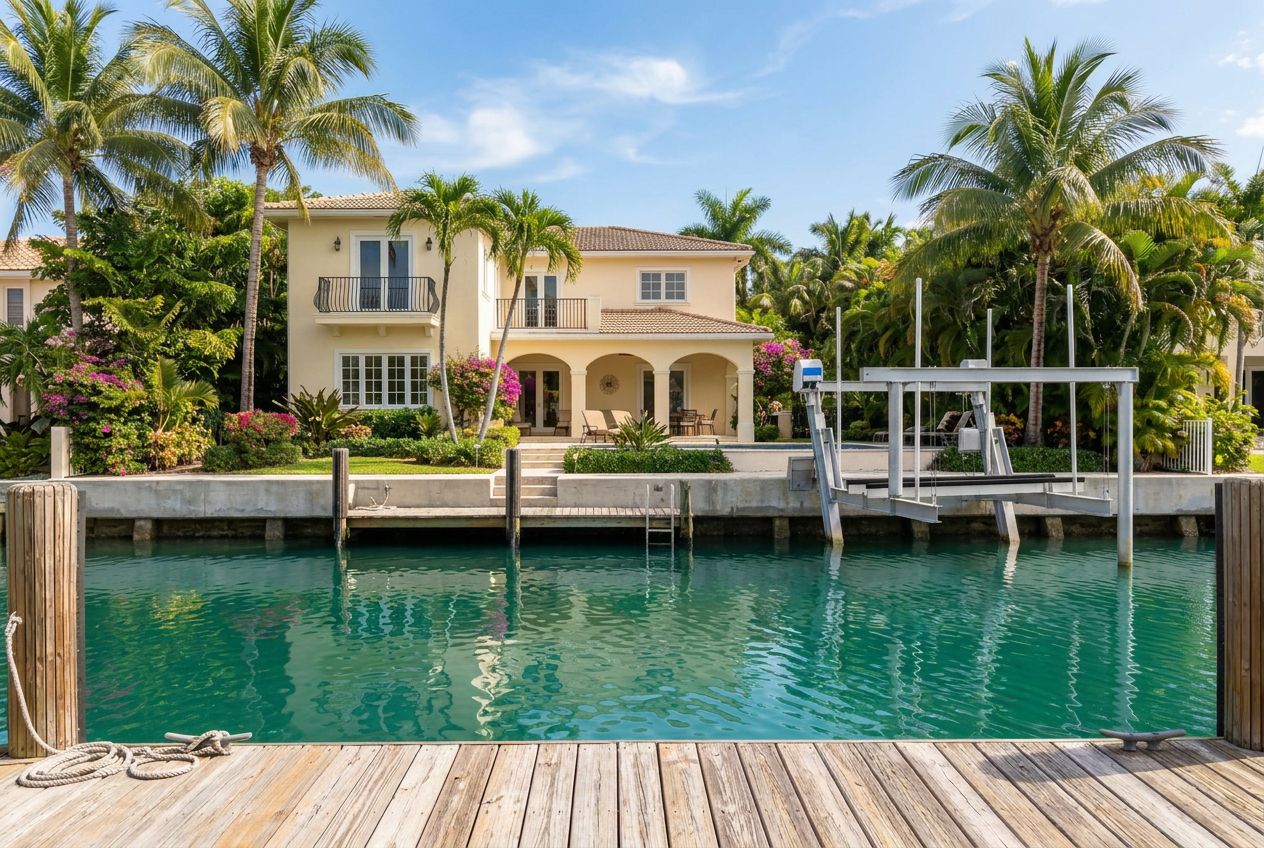
Most buyers start their Florida Keys home search online. They browse listings, fall in love with the water, and contact an agent ready to buy somewhere in the Keys. The problem, according to Sandy Tuttle, is that “somewhere in the Keys” is not actually a useful starting point. Tuttle is the founder/owner of Island Welcome Real Estate, a boutique real estate firm based in the Lower Florida Keys with 22 years in the market. She says the first question she asks every new buyer is not about budget or bedrooms. It is about which part of the Keys they are actually looking for – because the four main submarkets—the Lower Keys, Marathon, the Upper Keys, and Key West—are genuinely different places with different personalities, different rules, and different trade-offs.
If rental income is a primary goal, Marathon should be the first place a buyer looks. The city of Marathon is the only community in the Florida Keys that will issue a weekly vacation rental license to any home, with no cap on the total number of licenses in circulation. That makes it meaningfully different from the rest of Monroe County. “If someone is investment-minded and wants a better income return, we are absolutely going to suggest we explore Marathon,” Tuttle said. For buyers who want a second home that generates real income when they are not using it, the ability to do weekly rentals rather than monthly ones changes the math significantly. The trade-off is atmosphere. Marathon has a higher volume of weekend visitors, more turnover in the neighborhood, and a more active environment than the Lower Keys.
The Lower Keys run from just south of the Seven Mile Bridge down to Key West, spanning roughly 32 miles from Big Pine Key to the city’s edge. Tuttle specializes in this stretch, and she describes it as the part of the Keys that still feels like the Keys used to feel. Because Monroe County requires a 30-day minimum rental term for most unincorporated areas, the Lower Keys does not have the constant turnover of short-term rental guests cycling through neighborhoods. “In the Lower Keys, you almost do not know which houses are rentals,” Tuttle said. “Because the clientele is lovely – they come in and treat the home just like it is theirs.” Accessibility has improved considerably, with Key West International Airport now offering direct flights from several major cities.
Key Largo anchors the Upper Keys and is, in many ways, an extension of the Miami market. For some buyers, the proximity to Miami International Airport and Fort Lauderdale-Hollywood International is exactly the draw. The trade-off is density and traffic. The Upper Keys sees far more vehicle volume than the rest of the Keys, and the weekend atmosphere reflects that. The buyer profile for the Upper Keys tends to skew toward people who want a quick getaway from Miami – not necessarily buyers who are planning to relocate permanently.
Tuttle runs through a consistent set of questions with every new buyer: What do you want your daily life to look like? Are you focused on boating, or do you want walkability? Are you hoping to generate rental income, or is this purely for personal use? The answers almost always point clearly toward one part of the Keys. “It is not one size fits all,” Tuttle said. “Things vary quite a bit, and we have to focus on a case-by-case basis to really identify properties.” If you are trying to figure out where in the Keys makes sense for your situation, exploring the different communities across the Florida Keys is a useful first step.